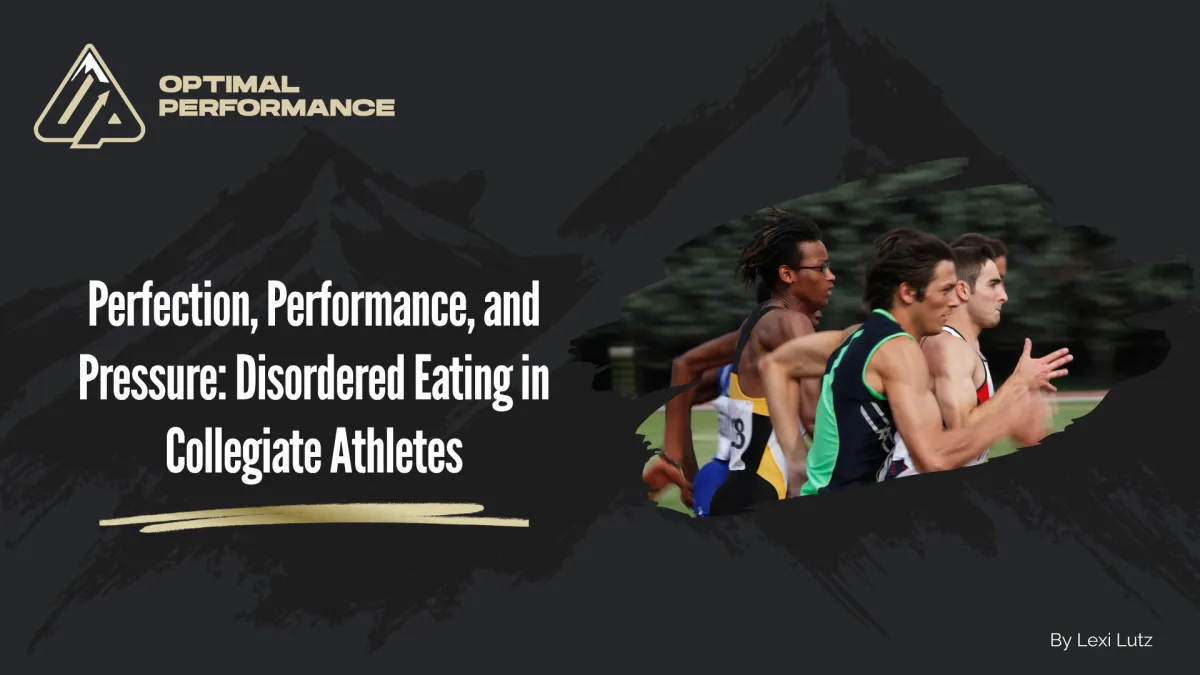
Perfection, Performance, and Pressure: Disordered Eating in Collegiate Athletes
Being a student already comes with immense pressure. For collegiate athletes, that pressure is intensified by the expectation to meet both performance standards and societal ideals surrounding body image. This dual expectation often fosters a perfectionist mindset, in which success is measured not only by athletic performance but also by physical appearance. Within this environment, eating disorders can develop and thrive, fueled by insecurity, control, and unrealistic standards.
The transition into college athletics is particularly vulnerable, as first-year athletes must navigate independence, increased training demands, and new social and environmental pressures. Without proper education in nutrition and bodily functions, many athletes come to equate food with weight gain rather than performance. This shift in mindset can lead to disordered eating patterns that negatively impact both physical health and mental well-being.
Collegiate athletes often face conflicting expectations: they are required to become stronger and more powerful while simultaneously maintaining a certain body type. This contradiction can create a harmful internal dialogue where food is no longer viewed as fuel, but as something to control. Instead of asking whether a meal will enhance performance, athletes may focus on whether it will lead to weight gain.
Perfectionism, while often praised in athletic settings, can become dangerous when tied to body image and food. The drive to excel in sport can expand into all aspects of life, creating unrealistic expectations in academics, relationships, and personal identity. Athletes frequently feel as though they are under constant evaluation—from coaches, teammates, and even themselves—which leaves little room for failure. In such environments, disordered eating behaviors can become normalized and even reinforced.
Eating disorders in athletes do not always present in obvious ways. While conditions such as Anorexia nervosa, Bulimia nervosa, and Binge eating disorder are widely recognized, many athletes experience more subtle forms of disordered eating. These may include skipping meals, relying on small snacks instead of three main meals, delaying food intake, or adhering to rigid calorie limits regardless of training demands.
In high-performance environments, these behaviors are often overlooked or even praised as discipline. Athletes may go long periods without eating, only to overconsume later, or engage in constant body checking and comparison. Over time, these patterns can evolve into more severe disorders. Importantly, research shows that eating disorders occur at higher rates in athletes than in non-athletes, with female athletes being particularly at risk due to sport-specific pressures emphasizing leanness and appearance.
One of the most significant consequences of disordered eating in athletes is low energy availability, which can lead to Relative Energy Deficiency in Sport (RED-S). This condition occurs when the body does not receive enough energy to support both exercise and basic physiological functions. The effects are widespread and include hormonal imbalances, decreased bone density, impaired recovery, and reduced athletic performance.
Closely related is the Female Athlete Triad, which consists of low energy availability, menstrual dysfunction, and decreased bone mineral density. These conditions significantly increase the risk of stress fractures and long-term health complications.
In addition to physical effects, under-fueling also impacts mental health. Inadequate nutrition can disrupt neurotransmitters such as serotonin and dopamine, leading to increased anxiety, obsessive thoughts, and rigid behaviors surrounding food and exercise. Fatigue, decreased concentration, and impaired academic performance are also common. In severe cases, particularly those involving purging behaviors, electrolyte imbalances may occur, increasing the risk of cardiac complications such as irregular heart rhythms.
Athletic environments play a critical role in shaping behaviors and beliefs around food and body image. Comments from coaches or teammates about weight, size, or appearance can significantly impact athletes, reinforcing harmful thought patterns. Uniforms, judging criteria, and sport-specific norms further contribute to the pressure to maintain a certain physique.
These external influences often amplify internal struggles, making it difficult for athletes to separate their self-worth from their appearance or performance. Over time, these beliefs can become deeply ingrained and may persist even after an athlete’s career has ended.
Addressing disordered eating in athletes requires both individual and systemic change. At the individual level, athletes must learn to reframe food as fuel—essential for performance, recovery, and overall health. Adequate and consistent energy intake is not optional; it is fundamental to success in sport.
Education is a critical component, particularly for first-year athletes who are managing their nutrition independently for the first time. Understanding how the body uses energy, the importance of carbohydrates, and the role of recovery can help athletes make informed decisions.
Recovery is most effective when supported by a multidisciplinary team, including sports dietitians, mental health professionals, and medical providers. Cognitive and behavioral strategies—such as challenging beliefs about body image, reducing body checking behaviors, and adopting flexible eating patterns—are also essential.
At the cultural level, athletic programs must shift their focus from appearance-based standards to performance-based metrics such as strength, endurance, and recovery. Creating supportive environments that prioritize health over aesthetics can significantly reduce the risk of disordered eating.
Several important lessons emerge from this discussion. First, food must be viewed as fuel rather than something to control or fear. Second, under-fueling is a serious and often overlooked issue that can negatively impact both performance and health. Third, perfectionism, while beneficial in moderation, can become harmful when it drives rigid and unrealistic expectations.
Additionally, athletic culture must evolve to reduce harmful messaging around body image and promote education on nutrition and health. Recognizing early warning signs—such as fatigue, missed menstrual cycles, frequent injuries, and obsessive thoughts—is essential for timely intervention. Finally, true athletic success depends not on achieving a specific appearance, but on supporting the body through proper fueling, recovery, and mental well-being.
Eating disorders in collegiate athletes are a complex and multifaceted issue rooted in perfectionism, environmental pressures, and a lack of education around nutrition. The transition into college athletics presents unique challenges that can disrupt an athlete’s relationship with food and body image.
Creating meaningful change requires a shift in both mindset and culture. By prioritizing health over appearance, performance over perfection, and education over assumption, athletes can develop a more sustainable and positive relationship with their bodies. Ultimately, supporting athletes in this way not only enhances performance but also protects their long-term physical and mental health.
Resources:
Home (2026) National Eating Disorders Association. Available at: https://www.nationaleatingdisorders.org/ (Accessed: 29 April 2026).
TrueSport. (2024). Relative energy deficiency in sport (RED-S). U.S. Anti-Doping Agency. https://truesport.org/wp-content/uploads/Relative-Energy-Deficiency-in-Sport-REDs.pdf